An improved version of this Walkthrough can be found here: Please SUBSCRIBE, LIKE and SHARE ★★★ Thanks:)Join us on. Apr 01, 2020 Half-Life is a first-person shooter game developed and published by Valve. It came out in 1998 and tells the story of Gordon Freeman, a scientist at the Black Mesa Research Facility, who must survive an alien invasion when an experiment goes horribly wrong.
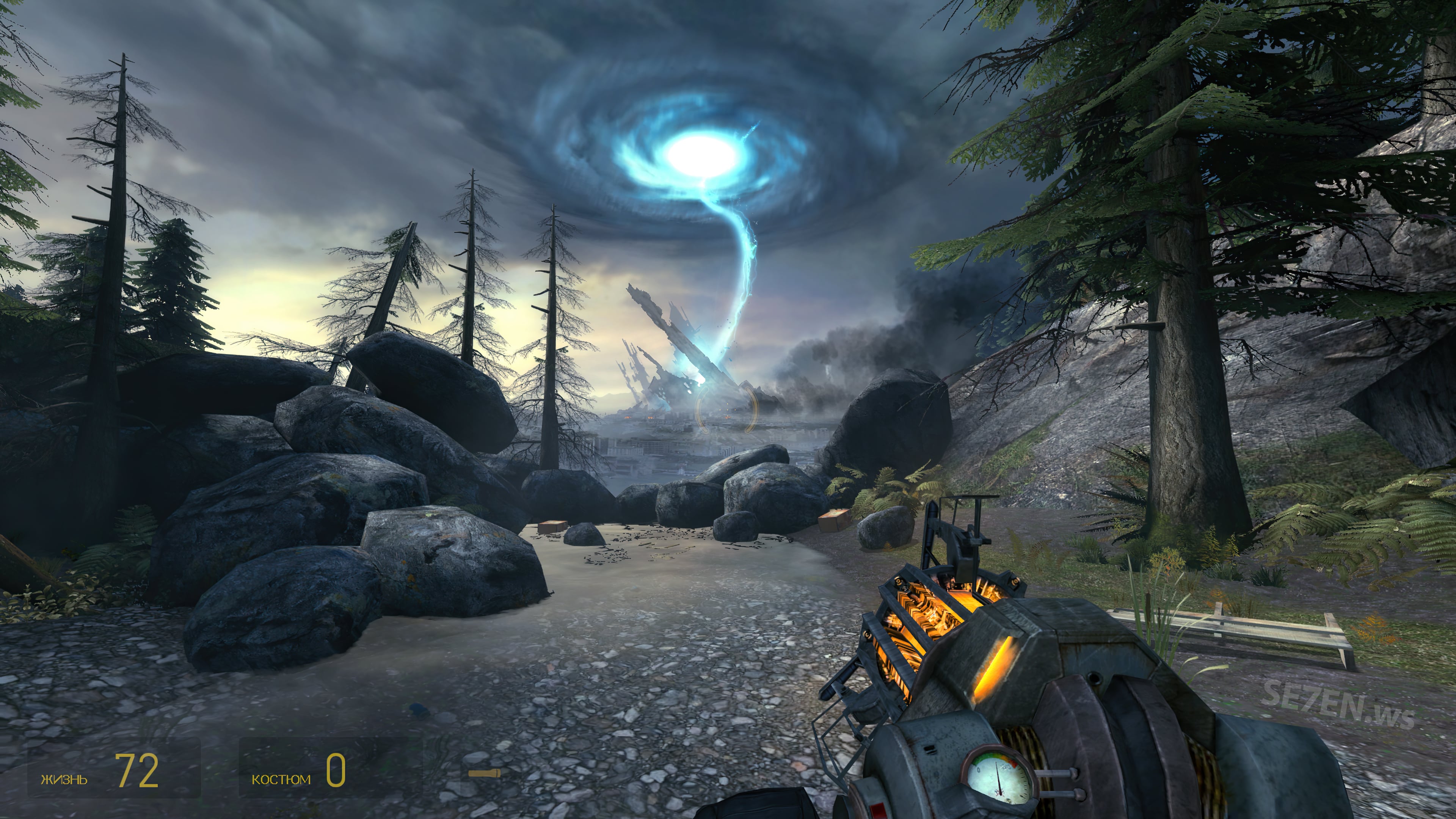
Half-Life is a sci-fi first person shooter released in 1998 on PC, and is often considered one of the most influential games of its time. Developed by Valve, the game made leaps and bounds in both storytelling and overall gameplay for the FPS genre. Half-life (symbol t 1⁄2) is the time required for a quantity to reduce to half of its initial value.The term is commonly used in nuclear physics to describe how quickly unstable atoms undergo radioactive decay or how long stable atoms survive. Half Life 2 is a first-person shooter by Valve Corporation. Six years did fans of the critically acclaimed Half Life have to wait for its successor, Half Life 2. Developed by the Valve Corporation, it was the very first game to use the developer's Source engine. Continuing the story of scientist-turned-action-hero Gordan Freeman in a alternate.
What is a pesticide half-life?
A half-life is the time it takes for a certain amount of a pesticide to be reduced by half. This occurs as it dissipates or breaks down in the environment. In general, a pesticide will break down to 50% of the original amount after a single half-life. After two half-lives, 25% will remain. About 12% will remain after three half-lives. This continues until the amount remaining is nearly zero. See Figure 1.
Figure 1. Approximate amount of pesticide (shaded area) remaining at the application site over time.
Each pesticide can have many half-lives depending on conditions in the environment. For example, permethrin breaks down at different speeds in soil, in water, on plants, and in homes.
- In soil, the half-life of permethrin is about 40 days, ranging from 11-113 days.
- In the water column, the half-life of permethrin is 19-27 hours. If it sticks to sediment, it can last over a year.
- On plant surfaces, the half-life of permethrin ranges from 1-3 weeks, depending on the plant species.
- Indoors, the half-life of permethrin can be highly variable. It is expected to be over, or well over, 20 days.
Why is a pesticide's environmental half-life important?
The half-life can help estimate whether or not a pesticide tends to build up in the environment. Pesticide half-lives can be lumped into three groups in order to estimate persistence. These are low (less than 16 day half-life), moderate (16 to 59 days), and high (over 60 days). Pesticides with shorter half-lives tend to build up less because they are much less likely to persist in the environment. In contrast, pesticides with longer half-lives are more likely to build up after repeated applications. This may increase the risk of contaminating nearby surface water, ground water, plants, and animals.
However, pesticides with very short half-lives can have their drawbacks. For example, imagine that a pesticide is needed to control aphids in the garden for several weeks. One application of a pesticide with a half-life of a few hours will probably not be very effective several weeks out. This is because the product would have broken down to near-zero amounts after only a few days. This type of product would likely have to be applied multiple times over those several weeks. This could increase the risk of exposure to people, non-target animals, and plants.
What can influence a pesticide's environmental half-life?
Many things play a role in how long a pesticide remains in the environment. These include things like sunlight, temperature, the presence of oxygen, soil type (sand, clay, etc.), how acidic the soil or water is, and microbe activity. See Table 1. Pesticide half-lives are commonly reported as time ranges. This is because environmental conditions can change over time. This makes it impossible to describe a single, consistent half-life for a pesticide.
A pesticide product's formulation can also change how the active ingredient behaves in the environment. In fact, the properties of the formulation may dominate initially, until enough time has passed to allow the ingredients to separate This is because small amounts of an active ingredient are 'formulated' with larger amounts of 'other' ingredients to make a whole pesticide product.
Table 1. Environmental factors that affect pesticide persistence.4
| Environmental Factors | Role in Chemical Degradation |
|---|---|
| Sunlight | Radiation from the sun breaks certain chemical bonds, creating break down products. |
| Microbes | Bacteria and fungi can break down chemicals, creating biodegradation products. |
| Plant / Animal Metabolism | Plants and animals can change chemicals into forms that dissolve better in water (metabolites). This makes removal from the body easier. |
| Water | Water breaks chemicals apart to make pieces that dissolve better in water (hydrolysis). This is typically a very slow process. |
| Dissociation | Chemicals can break apart into smaller pieces (dissociation products). |
| Sorption | Chemicals that stick tightly to particles can become inaccessible and/or move away with those particles. |
| Bioaccumulation | Some chemicals can be absorbed by plants/animals from the soil, water, food, and air. When the plant/animal is exposed again before it can remove the chemical(s), accumulation can occur. |
How is a pesticide's half-life determined?
Pesticide half-lives are often determined in a laboratory. There, conditions like temperature can be controlled and closely monitored. Soil, water, or plant material is mixed with a known amount of a pesticide. The material is then sampled and tested over time to determine how long it takes for half of the chemical to break down.
Field studies are also performed for some chemicals. A known amount of the pesticide is mixed with soil, water, or plant material. It is then placed in an outdoor environment where it is exposed to various environmental conditions and tested over time. Field studies provide researchers with a more realistic idea of how the pesticide will act in the environment. However, half-life values from such studies can vary greatly depending on the exact conditions. See Figure 2.
Before a pesticide product is registered, manufacturers measure their half-lives. You can find their research results in a variety of databases, books, and peer-reviewed articles. If you need help, call the National Pesticide Information Center.
What happens to pesticides after they 'go away'?
When a pesticide breaks down it doesn't disappear. Instead, it forms new chemicals that may be more or less toxic than the original chemical. Generally, they are broken into smaller and smaller pieces until only carbon dioxide, water, and minerals are left. Microbes often play a large role in this process. In addition, some chemicals may not break down initially. Instead, they might move away from their original location. It all depends on the chemical and the environmental conditions.
Inorganic pesticides like iron phosphate and copper sulfate don't break down in the same way as organic pesticides.10,12 The 'half-life' concept only applies to organic pesticides, those that contain carbon components.
Figure 2. The soil half-life of five pesticides.8,9,11,13,15
Where can I get more information?
For more detailed information about pesticide half-lives please visit the list of referenced resources below or call the National Pesticide Information Center, Monday - Friday, between 8:00am - 12:00pm Pacific Time (11:00am - 3:00pm Eastern Time) at 1-800-858-7378 or visit us on the web at http://npic.orst.edu. NPIC provides objective, science-based answers to questions about pesticides.
Please cite as: Hanson, B.; Bond, C.; Buhl, K.; Stone, D. 2015. Pesticide Half-life Fact Sheet; National Pesticide Information Center, Oregon State University Extension Services. http://npic.orst.edu/factsheets/half-life.html.
Also found in: Dictionary, Thesaurus, Financial, Encyclopedia, Wikipedia.
half-life
[haf´līf″]half-life
(haf'līf),half-life
Half-life Equation
(hăf′līf′, häf′-)n.Half-life
BiologyHaematology The time that cells stay in the circulation—e.g., red blood cells, 120 days, which increases after splenectomy; platelets, 4–6 days; eosinophils, 3–7 hours; neutrophils, 7 hours
Immunology The time an immunoglobulin stays in the circulation: 20–25 days for IgG, 6 days for IgA, 5 days for IgM, 2–8 days for IgD, 1–5 days for IgE
Nuclear medicine The length of time required for a radioisotope to decay to one-half of the original amount having the same radioactivity; a radioisotope’s effective T1/2 is either the time of decay—physical T1/2—or the time to elimination from a biological system. See Biological half-life
Physiology The time that it takes for half of a molecule’s activity to decay
Research See Cited half-life, Citing half-life
Therapeutics The amount of time it takes for the serum concentration of a drug to fall 50%, which reflects its rate of metabolism and elimination of parent drug and metabolites in the urine and stool
half-life
T1/2 The amount of time required for a substance to be reduced to one-half of its previous level by degradation and/or decay–radioactive half-life, by catabolism–biological half-life, or by elimination from a system–eg, half-life in serum Hematology The time that cells stay in the circulation–eg, RBCs 120 days–which ↑ after splenectomy, platelets–4-6 days, eosinophils–3-7 hrs, PMNs–7 hrs Immunology The time an Ig stays in the circulation: 20-25 days for IgG, 6 days for IgA, 5 days for IgM, 2-8 days for IgD, 1-5 days for IgE Therapeutics The time that a therapeutic agent remains in the circulation, which reflects its rate of metabolism and elimination of parent drug and metabolites in the urine and stool. See Effective half-life.Half Life 3
half-life
(haf'līf)Compare: half-time
half-life
the time required for half of the mass of a radioactive substance to disintegrate. For example, the half-life of 14C is 5,700 years.Half-life
Half Life 2
half-life
(haf'līf)Compare: half-time
Want to thank TFD for its existence? Tell a friend about us, add a link to this page, or visit the webmaster's page for free fun content.
Half Life:alyx
Link to this page: